Civic & public interest
The Spirit of Detroit
A city makes better decisions when it can see them coming.
An independent civic platform that explains the surveillance and infrastructure decisions being made about Detroit — police drones, AI data centers, license-plate cameras, and more — in plain language, with every claim sourced and a clear way to take part before anything is decided.
Brand & identity · Editorial design · Website design · Development · Email alerts · Launch
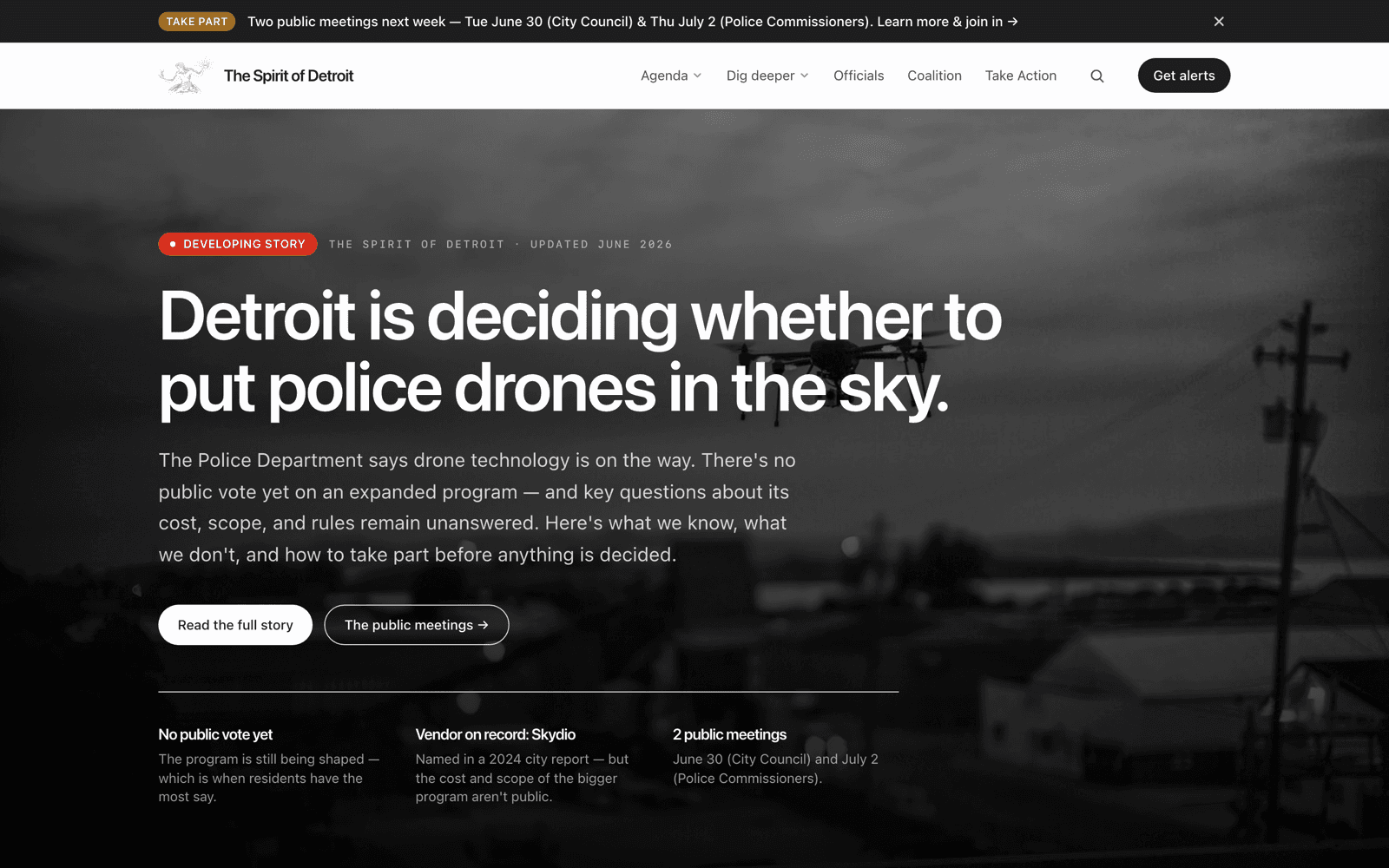
7 issues
Drones · data centers · cameras & more
Cited
Every claim linked to a source
Alerts
Residents notified before each meeting
Challenge
Decisions about surveillance and infrastructure get made in rooms most residents never hear about — buried in agendas, written in procurement language, voted on before the public weighs in. The platform had to make those decisions legible without sliding into either alarmism or jargon: serious, sourced, non-partisan, and impossible to dismiss as a blog.
Approach
We built a newsroom-grade editorial system — a restrained black-and-white design with a single red signal color, set in a confident display face. Each issue opens as a developing story with a plain-language explainer, a sourced "things worth knowing" rundown, real data visualizations, an officials directory, and a coalition. Every claim links to its source, and every page routes to one action: get alerts before the next public meeting.
Outcome
A platform that reads like a public-interest newsroom, not a flyer — calm, cited, and built to keep residents ahead of the decision instead of reacting after it. New issues, officials, and meetings publish through the same system, so coverage stays current without touching the design.
Visual breakdown
Built to make hard decisions legible.
Every surface was designed for trust and clarity — newsroom restraint, sourced claims, and a single action on every page. The result reads like public-interest journalism, not advocacy.
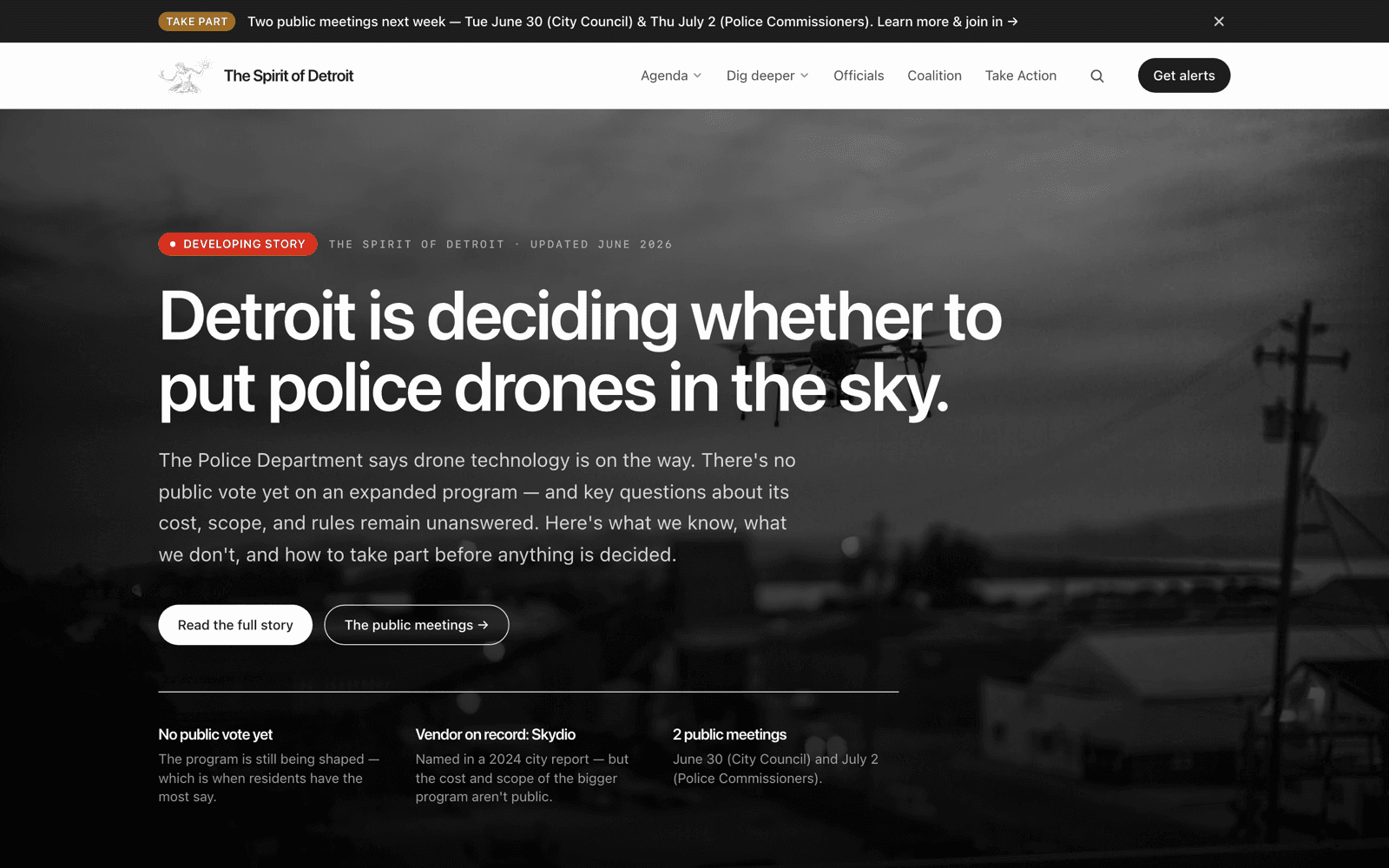
Desktop — developing-story hero
01
Developing-story hero
Each issue opens like a newsroom front page — a stark headline over the real subject, a plain-language standfirst, and three at-a-glance facts: what is known, what is not, and when the public can weigh in.
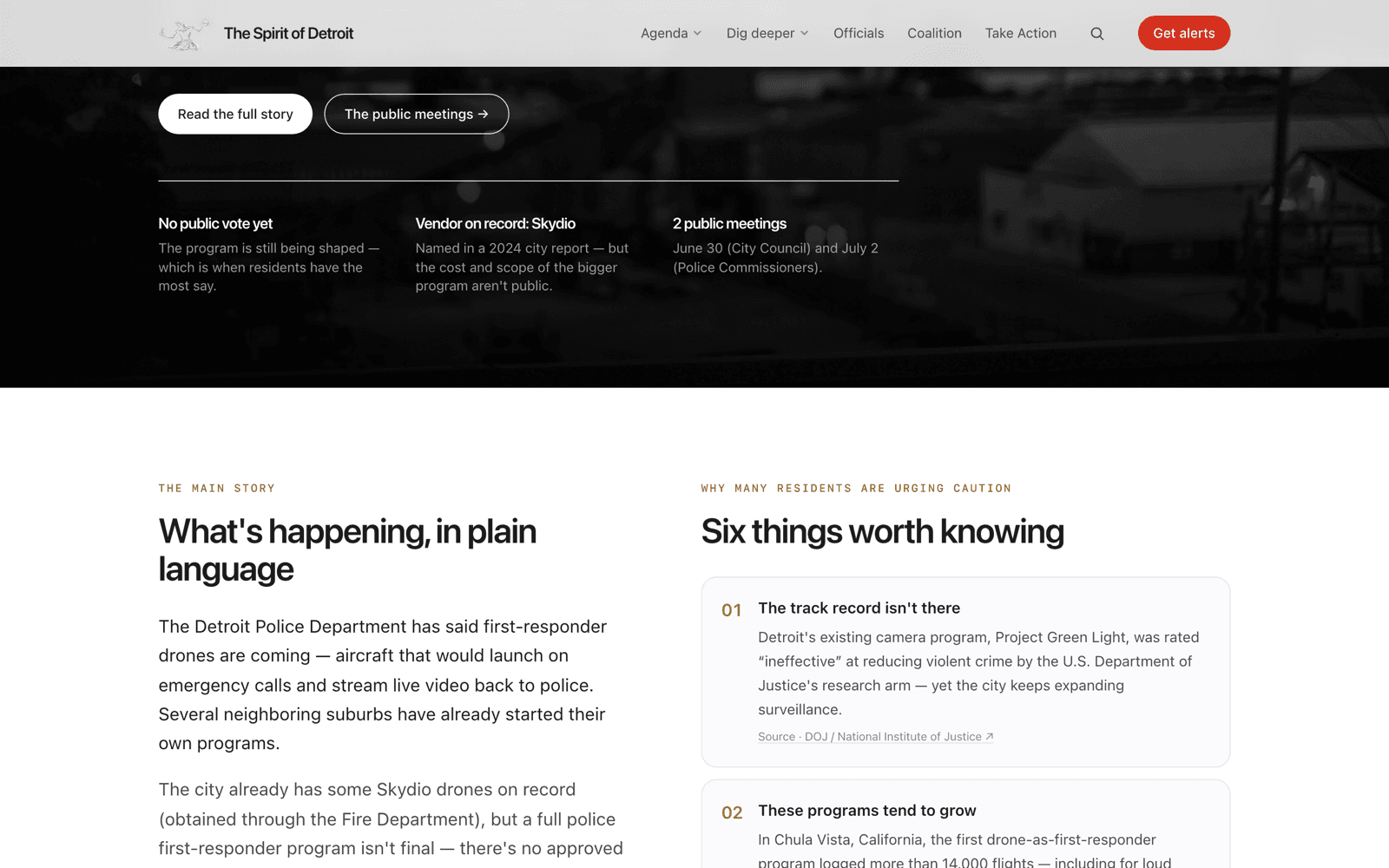
Desktop — explainer & sources
02
Plain language, sourced
A two-column explainer pairs "what’s happening, in plain language" with "things worth knowing" — each point carrying a link to its primary source, from the DOJ to city records, so nothing has to be taken on faith.
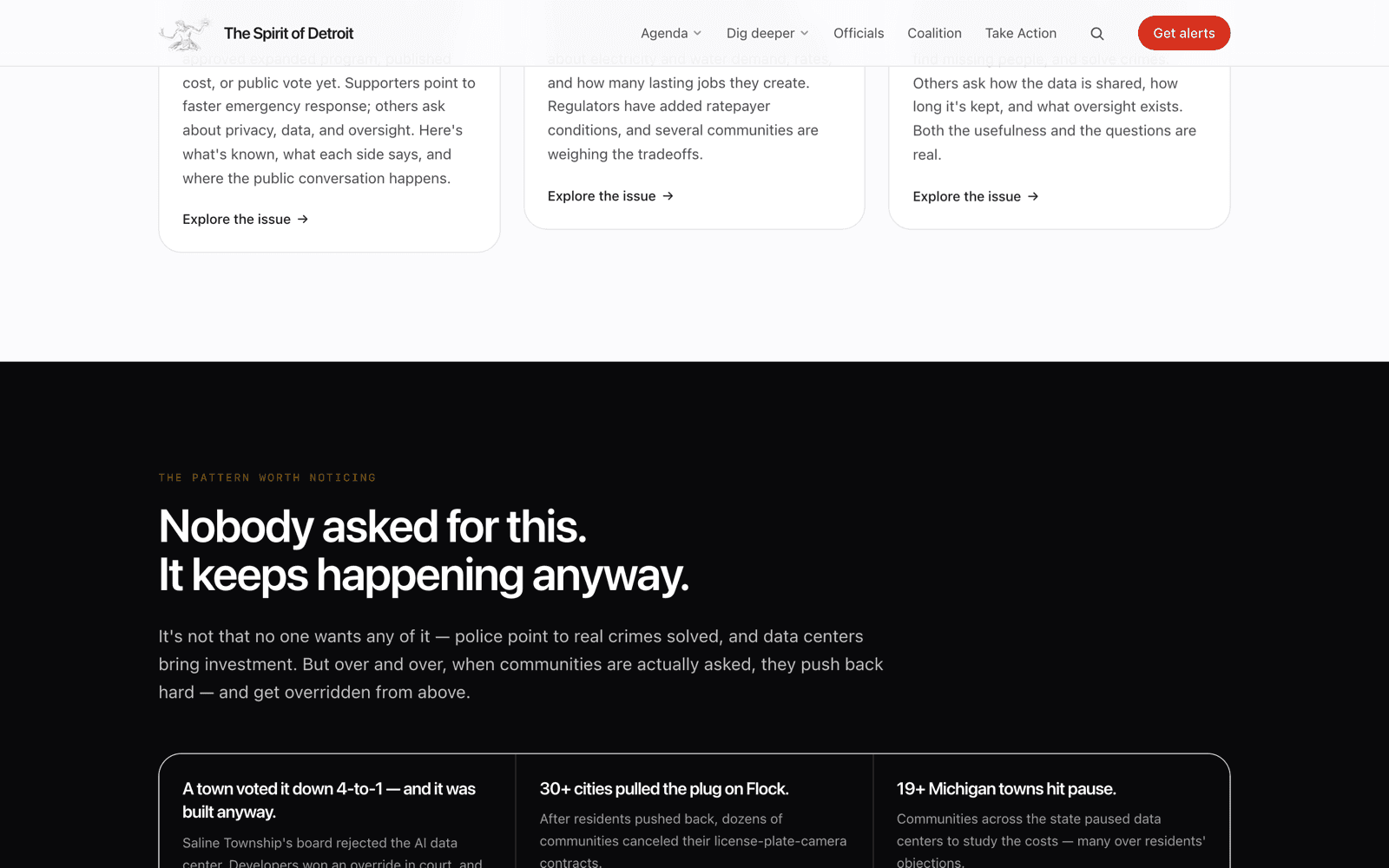
Desktop — cross-issue pattern
03
The pattern worth noticing
A dark, high-contrast section connects the dots across issues — towns that voted programs down and got overridden, cities that pulled the plug on camera contracts — framing the through-line without editorializing.
Desktop — data visualization
04
Evidence, visualized
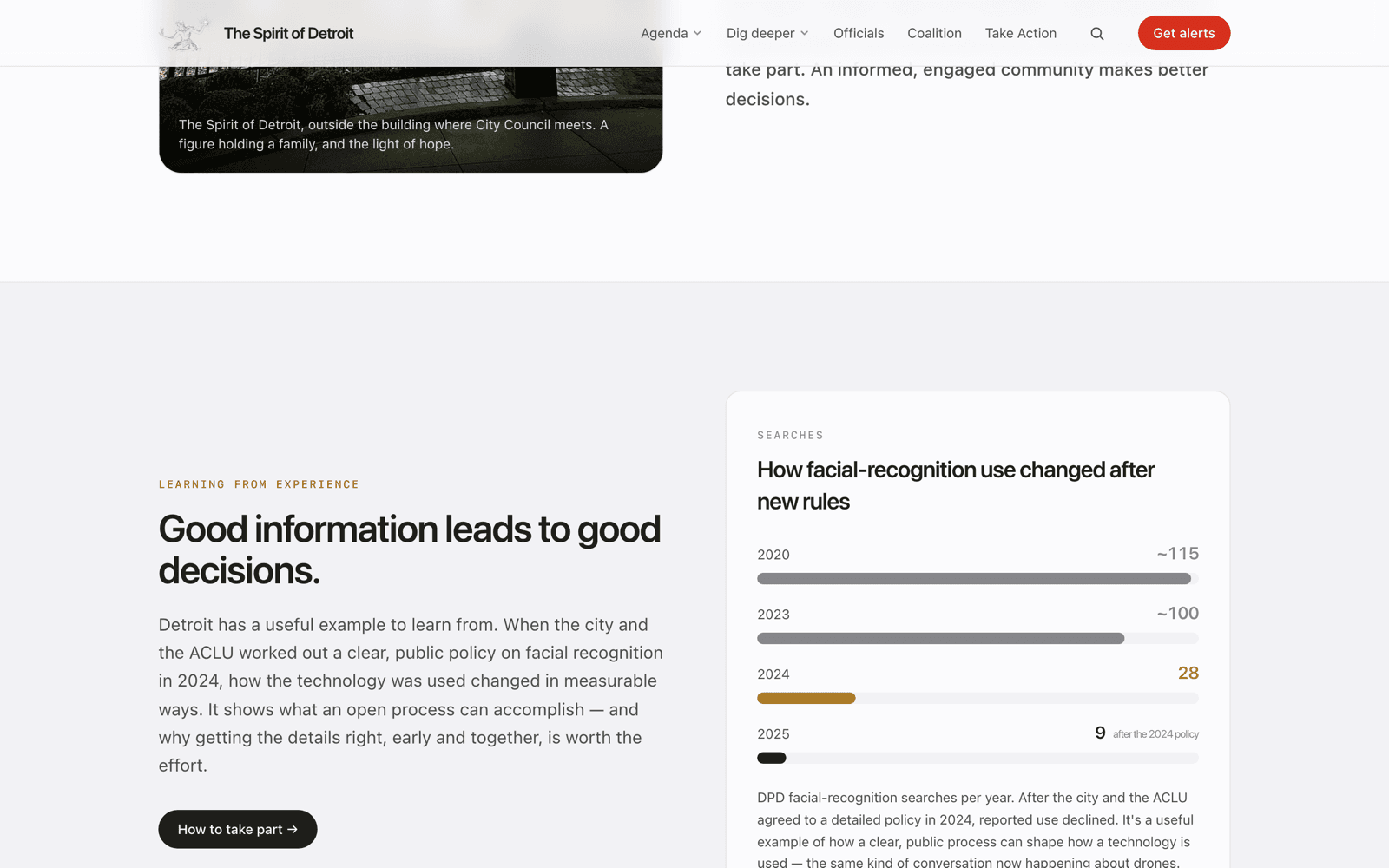
Real data, drawn clean — like how facial-recognition searches dropped after a clear public policy was set. The charts make the case that an open process changes outcomes in measurable ways.
Mobile — homepage & alerts
05
Mobile-first
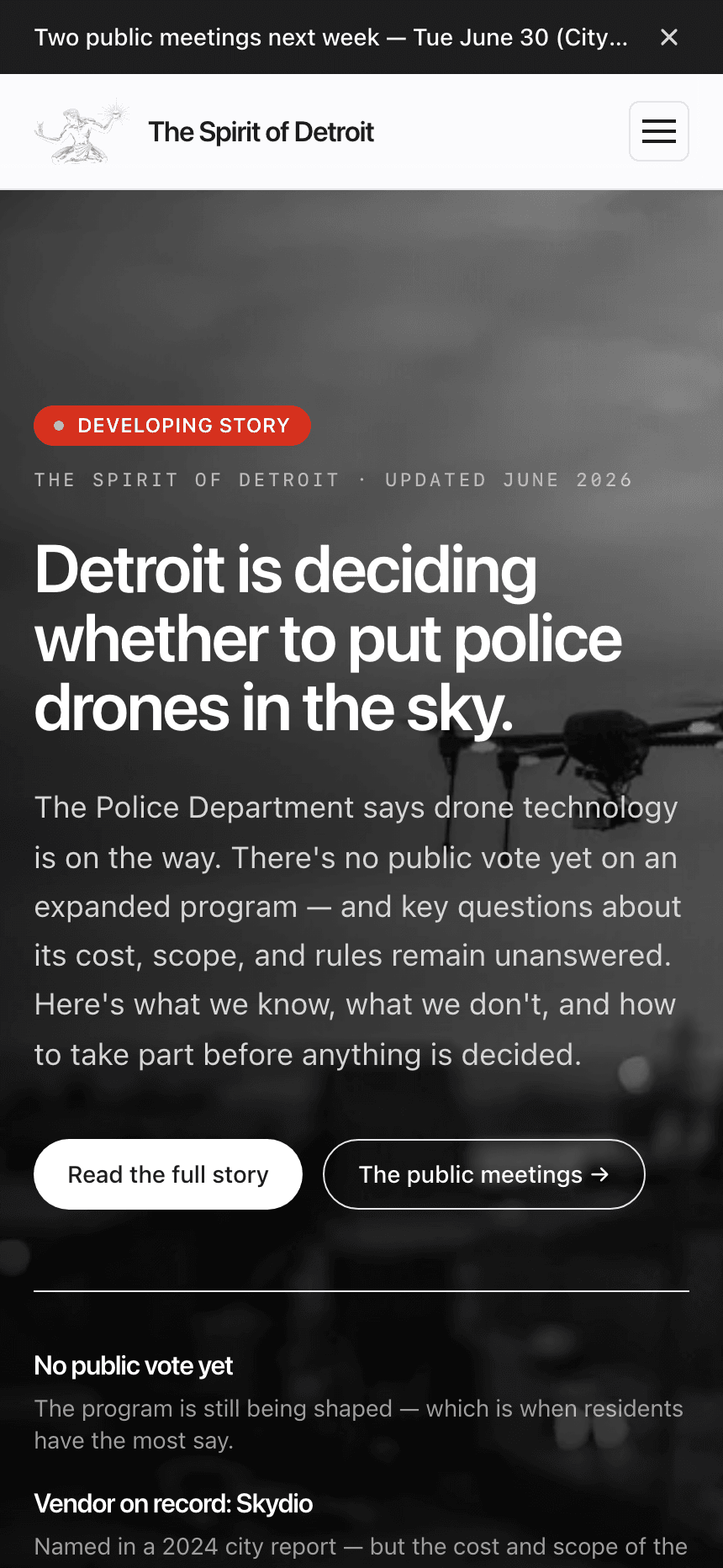
The same calm, legible experience on phone — where most residents read the news, check a meeting time, and sign up for alerts in a single sitting.
What we delivered
- Newsroom-grade editorial system in restrained black, white & signal red
- Plain-language explainers for drones, data centers, cameras & more
- Every claim linked to a primary source (DOJ, ACLU, city records)
- Data visualizations that quantify the real-world stakes
- Officials directory, coalition, and one-tap meeting alerts
What they can manage
New issues, officials, and public meetings publish through one system — the coverage stays current and the alerts keep going out without a developer.