One system. The door, the phone, the desk, the office.

The guide visitors meet, and everything behind it.

01

Three faces.

Visitors meet one guide, three ways.

The entrance

One screen at the door.
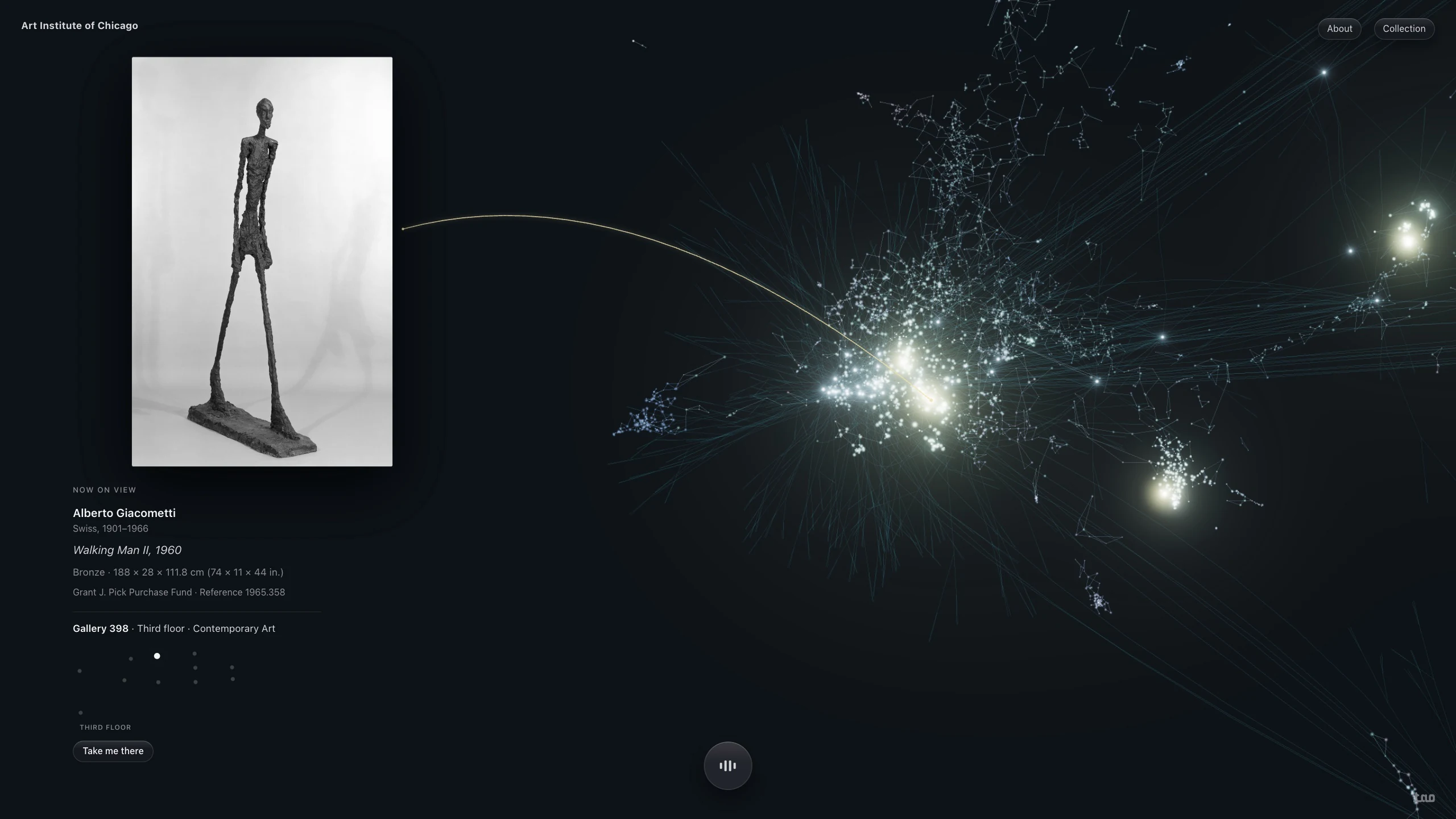
The entrance screen: Walking Man II by Alberto Giacometti on the wall, its label beside it

A large screen in the entrance hall runs the guide by voice. Visitors ask; it answers and shows the work. Left alone, it walks the collection.

Their phone
The guide, in every pocket.

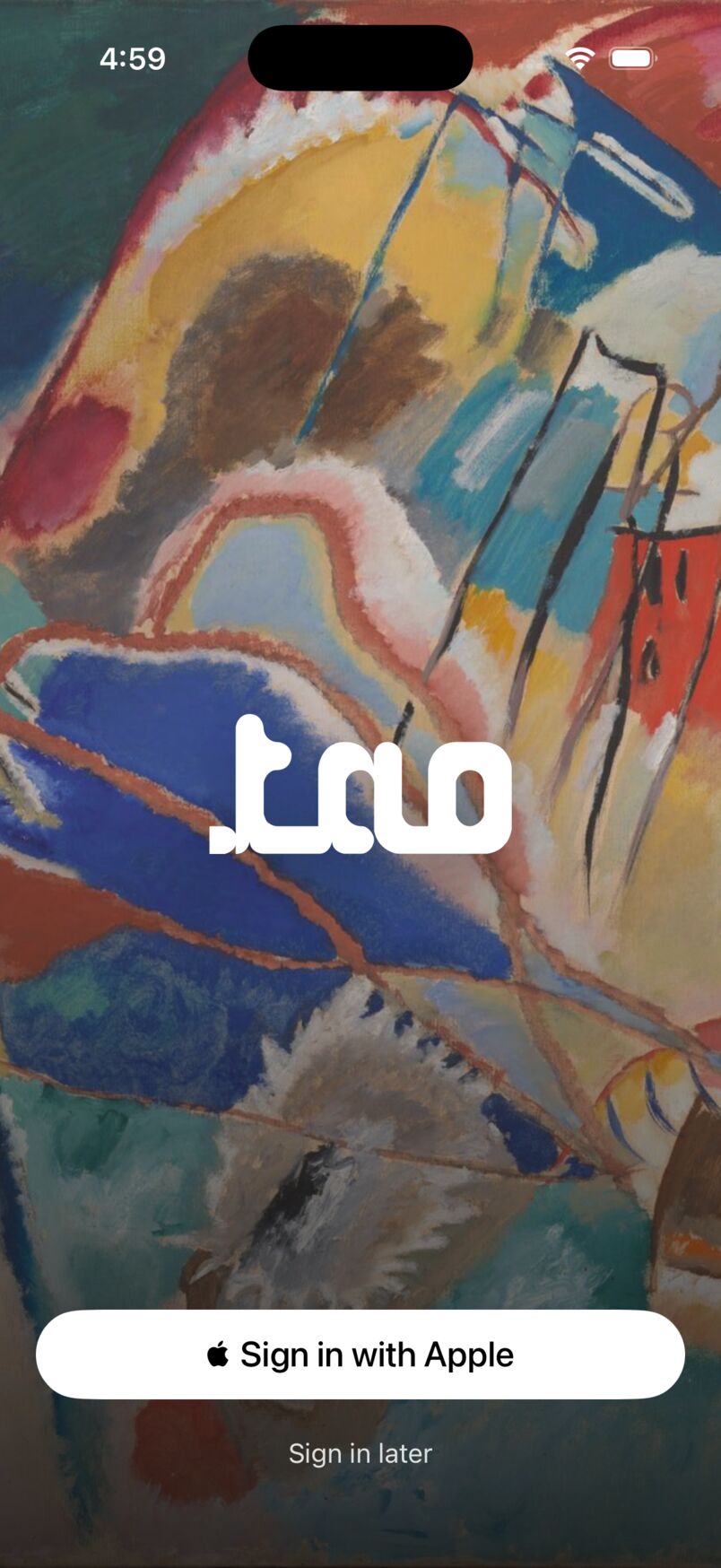
The TAO app opening: the TAO mark over a painting, Sign in with Apple

TAO on a visitor’s own iPhone, or the App Clip from a plaque with nothing installed. Every work, every gallery, and the way there.

The desk
The collection, kept like a library.

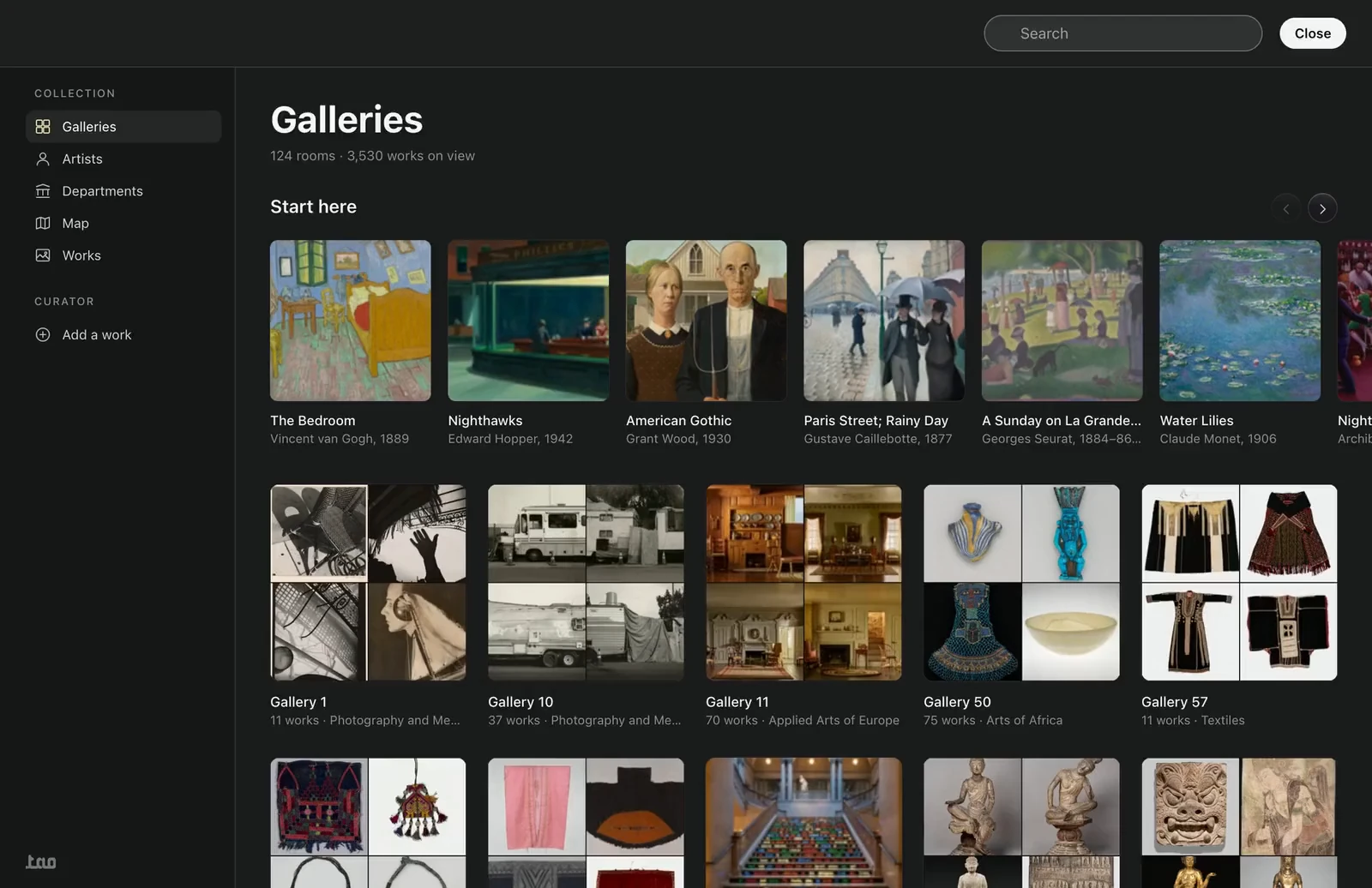
The desk library: Galleries as a grid of covers

Staff browse galleries, artists and works the way a music app lists albums, and add a work with a photograph and its label.

02

The index.

The guide reads the museum’s own records, and nothing else.

Collection
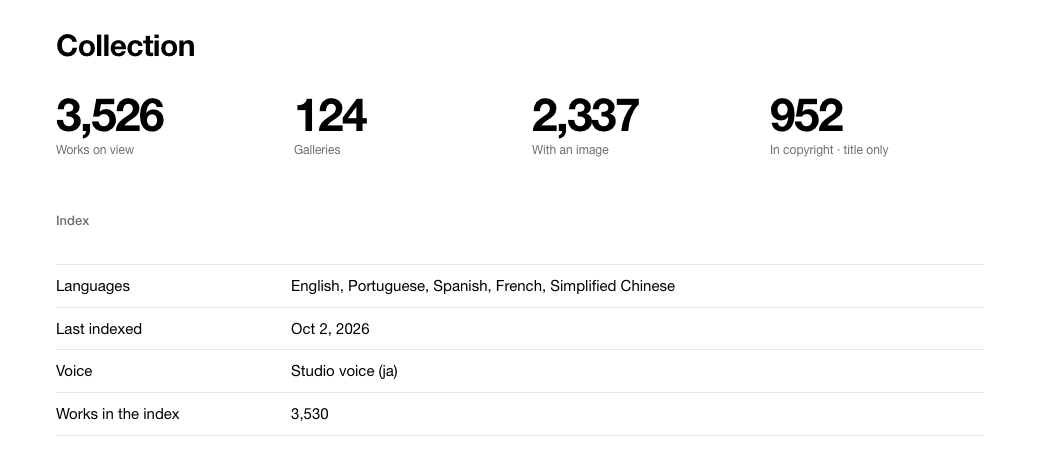
Every work on view, in one index.

The console, Collection: 3,526 works on view, 124 galleries, 2,337 with an image, 952 in copyright; the index in five languages
What it does
The collection comes in from the museum’s own published records. Every work on view, with its gallery, its image and its record.
Why it matters
When the records don’t say, neither does the guide.
What you click
Collection.

03

The guide.

One voice per museum, in the visitor’s language.

The voice
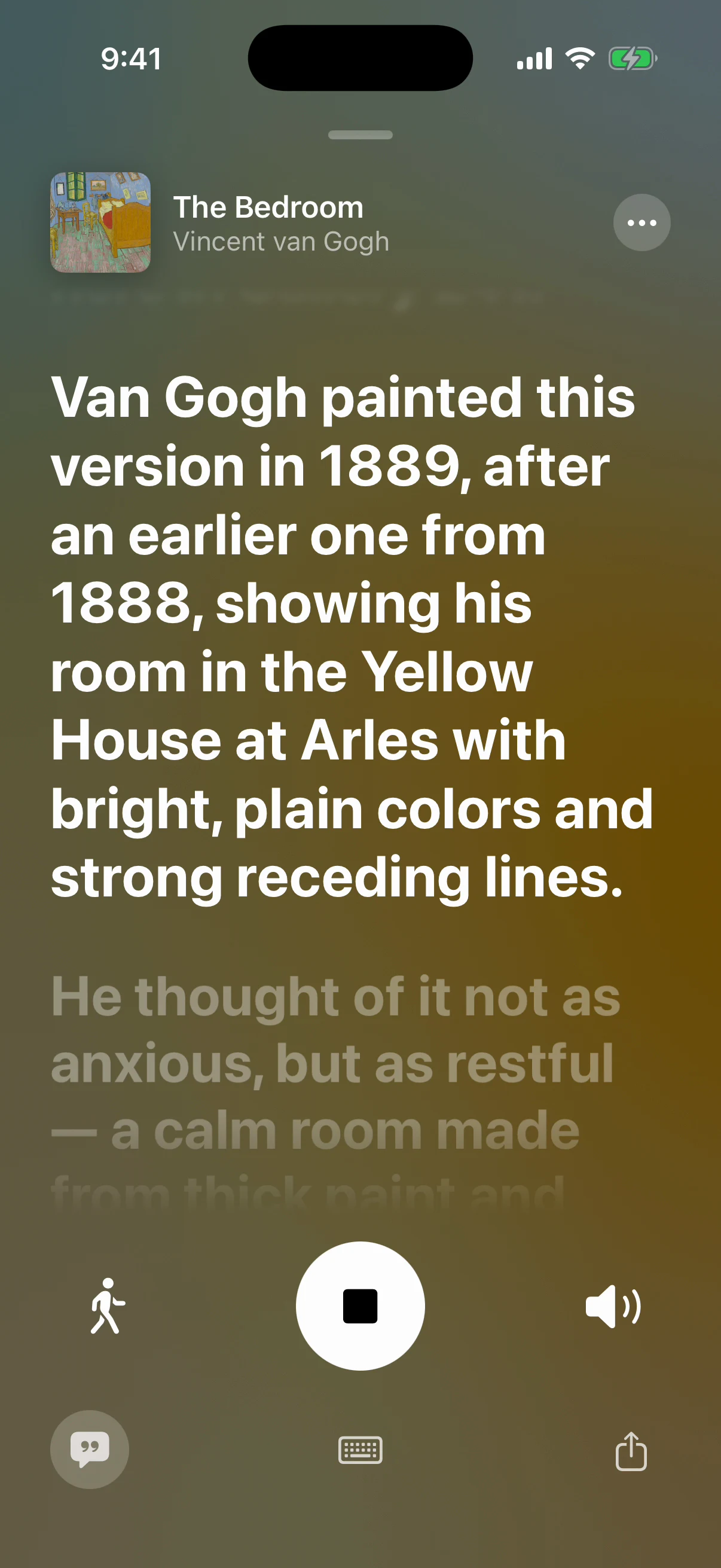
It speaks for the collection.

The TAO app: the guide answering about The Bedroom, the answer as lyrics
Five languages
English, Spanish, French, Portuguese and Chinese.
For every visitor
It describes the art for visitors who can’t see it.
Tours
Ask for an hour; it plans the walk to the minute, in the order of the building.
The first word
Openers are prepared in advance, so the first word is instant.

04

The console.

Rooms, Collection, Plaques, Beacons, Guide, Museum. One page for each.

Plaques and beacons
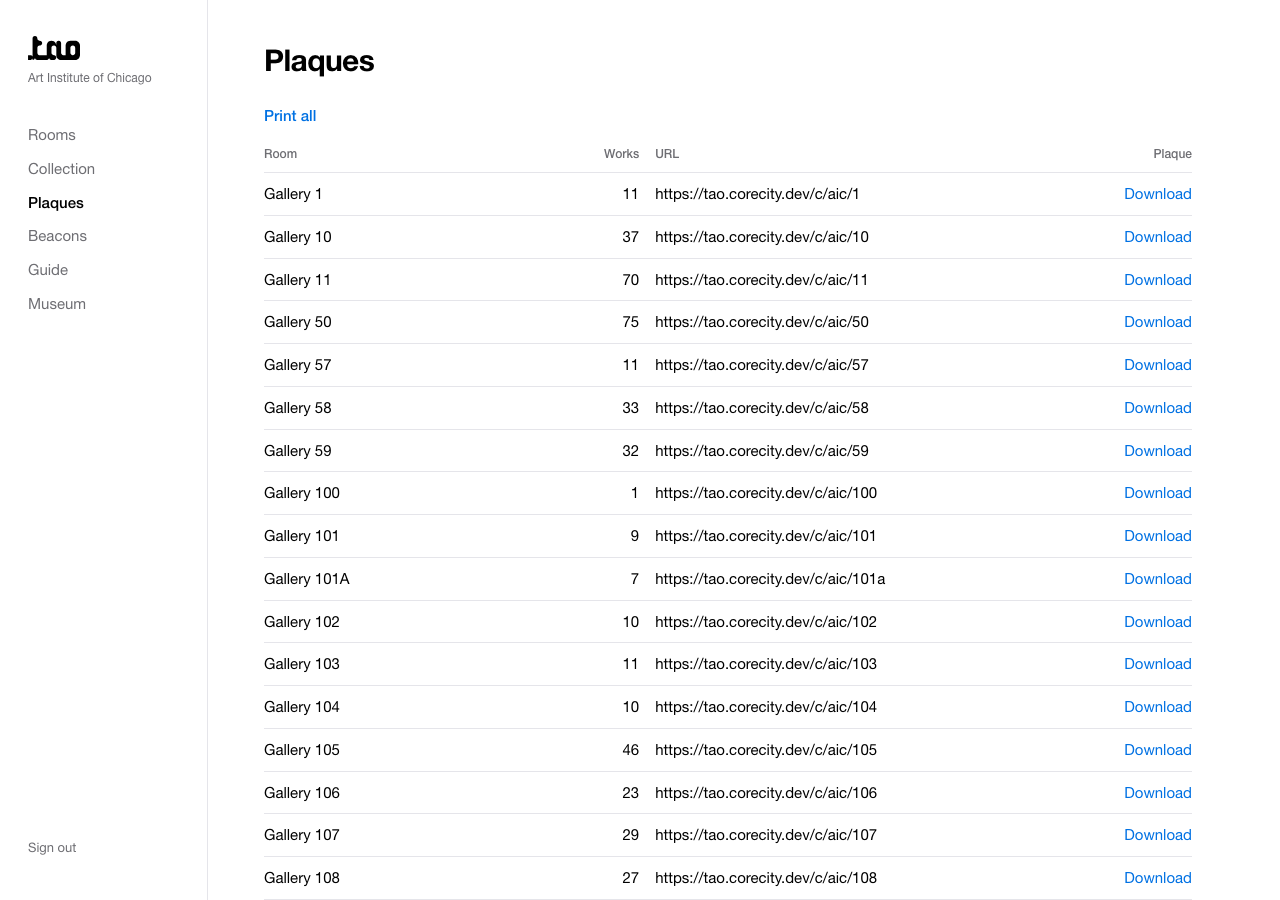
Every room, ready to fit.

The console, Plaques: every gallery, its works, its URL, a download
The console, Beacons: the museum’s UUID, and each room’s major and minor
Plaques
Every gallery’s code and URL, and a sheet ready to print.
Beacons
One plan per museum. A room keeps its number for good.
Guide and Museum
The voice, the languages, the first lines, the house details.

How it runs.

Hosted by the studio, or based at the institution. The same system.

Where it lives.
On the studio’s servers, or on one machine in your building.
Backed up nightly.
Every install, every night, kept thirty days.
Updated in your window.
Updates ship in a maintenance window you sign off.
Rolled back on its own.
If a new version fails its check, the last one returns.

What you buy.

Four lines. One system.

Pilot.
90 days, one wing.
Installation.
Once: the collection, the plaques, the beacons, the screen, the console.
Care.
Yearly. The galleries change; the guide keeps up.
Projects.
Your website and your building, on the same index. Priced per project.

Run it in your building.

hello@corecity.dev